
Lawn Aeration and Overseeding in Powhatan, VA
The most important thing most Powhatan homeowners never do for their lawn - and the one treatment that makes the biggest difference to next year's turf quality.
SEPT
Prime Aeration Window Opens
17+
Years Aerating Lawns
OCT 15
Hard Deadline for Overseeding
Lawn Aeration and Overseeding for Powhatan, VA Homeowners
Fiore's Landscaping provides core lawn aeration and overseeding for residential properties across Powhatan County. If you do one thing for your lawn each year, this is the one to get right. Aeration relieves the soil compaction that builds up in Powhatan's heavy clay soil over a season of mowing and foot traffic. Overseeding fills in thin spots and thickens the turf, which is the single best defense against weed encroachment the following spring.
The timing is not flexible. In Central Virginia, the window for fall aeration and overseeding runs from early September through mid-October. Seed germination requires soil temperatures above 50 degrees Fahrenheit, and once those temperatures drop, any seed put down simply won't establish before winter. Chris Fiore has been scheduling and completing aeration jobs across Powhatan County since 2007 and understands exactly when and how to get this done right.
Request a free estimate and we'll assess your lawn and get you on the fall schedule before the window closes.
What Core Aeration Does to Your Lawn
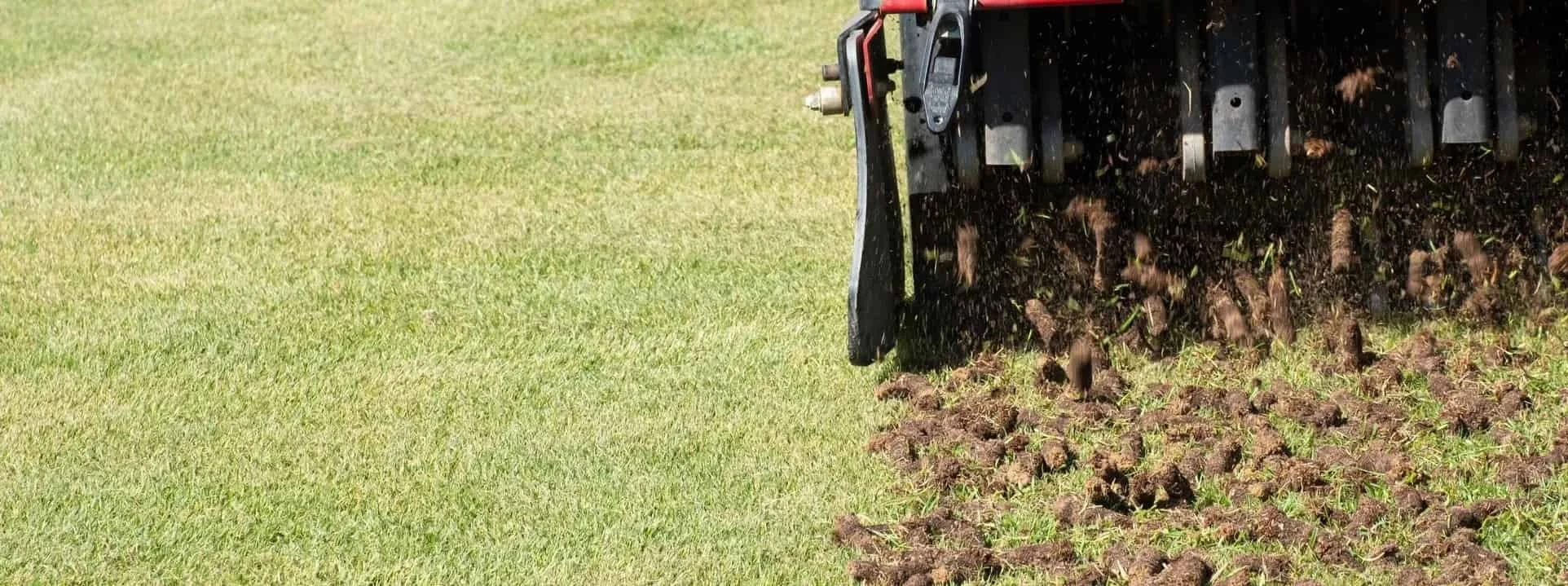
Core aeration is not the same as spiking or rolling. A core aerator pulls out actual plugs of soil, typically 2 to 3 inches deep and about half an inch wide, spaced every few inches across the lawn. Those holes do three things at once:
1. Breaks up compacted clay
Powhatan's native clay compacts under the weight of mowing equipment and regular use. Compacted soil blocks roots from going deep, restricts water absorption, and creates the hard, worn-looking patches you see on high-traffic areas. Pulling cores physically opens channels through that compaction layer.
2. Reduces thatch buildup
Thatch is the layer of dead grass stems and roots that accumulates between the soil and the live grass blades. A small amount is normal. More than half an inch starts blocking water and air from reaching the roots. Core aeration speeds up thatch decomposition by introducing soil microbes to the organic material on the surface.
3. Creates seed-to-soil contact for overseeding
Grass seed scattered on top of a dense, thatch-heavy lawn has almost no contact with actual soil. Most of it dries out or washes away before germinating. The holes left by core aeration give seed direct access to soil and a protected pocket to germinate in, which is why overseeding immediately after aeration produces dramatically better results than either practice done alone.
The cores pulled from the lawn are left on the surface. They break down within one to two weeks and actually help feed the lawn as they decompose. So, just leave them alone.
What Grass Seed Works in Powhatan County
Seed selection matters as much as timing. Powhatan County sits in Virginia's transition zone, which means summers are too hot for pure cool-season grasses and winters are too cold for warm-season grasses to stay green year-round. The right answer for most Powhatan residential lawns is a tall fescue blend. Tall fescue handles the heat and drought stress of a Central Virginia summer better than Kentucky bluegrass or fine fescue, and it establishes well in Powhatan's clay-heavy soil when sown in fall. We use quality-rated turf-type tall fescue blends, not the cheap pasture mixes you find at big box stores.
Why Blend Matters
A blend of three to four tall fescue varieties spreads disease and stress risk across the lawn. If one variety is susceptible to a particular fungal problem in a given season, the other varieties in the blend compensate. Monocultures fail. Blends persist.
Seeding Rate and Coverage
Overseeding into an existing lawn requires a higher seeding rate than new lawn establishment because most seed lands on existing turf and only a fraction reaches soil. We calibrate seeding rate based on your current turf density. Thin or bare areas receive heavier application. Established sections receive lighter coverage to thicken without overcrowding.
The Powhatan Fall Lawn Calendar
Miss the window and you wait a full year. Here is exactly what needs to happen and when, based on Central Virginia conditions:
| Month | Status | What to Do |
|---|---|---|
| Late Aug | Prep | Stop applying nitrogen fertilizer. Let the lawn slow down before the aeration window opens. |
| Early Sept | Book it | Schedule your aeration and overseeding. Slots fill fast -- this is the most in-demand service of the year. |
| Sept 1-30 | Prime window | Core aerate and overseed. Soil temperatures are still warm enough for fast germination. Best results of the season happen here. |
| Oct 1-15 | Still viable | Aeration and overseeding still works but germination slows as nights cool. Get it done before mid-October. |
| After Oct 15 | Too late | Soil temperatures below 50F prevent germination. Seed put down now will not establish before winter. Wait for spring, or plan for next fall. |
| Nov | Post-care | Keep mowing until the grass stops growing. Do not let leaf buildup smother newly germinated seedlings. |
| Dec - Feb | Dormant | New seedlings are dormant but alive. Avoid heavy foot traffic on newly seeded areas. |
| March | Results | If fall seeding went well, you will see noticeably thicker turf by early spring. Now is the time to assess any thin areas. |
What Happens to a Powhatan Lawn That Never Gets Aerated
Aeration is not urgent in the way a broken gutter is urgent. The lawn does not fall apart in one season without it. But the decline is consistent and predictable, and most homeowners only notice it after two or three years have passed.
Soil compaction gets worse each year. Every pass of a mower, every afternoon of kids playing, every inch of clay-heavy soil settling under its own weight makes the problem deeper. Roots cannot penetrate compacted soil, so they stay shallow. Shallow roots cannot access moisture or nutrients below the surface, so the lawn becomes increasingly dependent on rainfall and gets more stressed during dry spells.
Thatch accumulates. Without the soil microbe activity that aeration promotes, the thatch layer grows thicker each season. Water runs off instead of soaking in. Fungal disease finds ideal conditions in the warm, moist thatch layer during Powhatan's humid summers.
Weeds fill the gaps. A thin, stressed lawn is an open invitation. Crabgrass, nutsedge, and broadleaf weeds establish in the bare spots and weak areas that appear when turf quality drops. Once weeds are established, controlling them costs more time and money than regular aeration would have.
Most homeowners who call us about a struggling lawn have not aerated in several years. In almost every case, regular fall aeration and overseeding would have prevented the problem they are now trying to fix.
Why Powhatan Homeowners Book Fiore's for Aeration
Chris Fiore has been aerating Powhatan County lawns since 2007. He runs a true core aerator, not the plug-pulling attachments that produce shallow, inconsistent results on dense clay. Core depth matters on clay soil - shallow cores do not reach the compaction layer that actually needs breaking up.
Scheduling discipline matters just as much as equipment. The fall aeration window is real and narrow in Central Virginia. We schedule jobs starting in early September and work through the window systematically. Homeowners who call in late October asking if it is too late to seed are almost always told it is - and that the answer was to book earlier.
We assess each lawn before recommending a seeding rate and blend. Not every Powhatan property has the same turf density, shade conditions, or soil drainage. The recommendation we give you is based on what we actually see, not a standard package. Every estimate is free.
Aeration and Overseeding Across Powhatan County
Fiore's Landscaping schedules fall aeration and overseeding for residential properties throughout Powhatan County, including communities around Grey Walls, Maple Grove, Tilman's Farm, Manor Oaks, Bel Bridge, and Oak Leaf Estates. Powhatan's clay soil makes aeration more important here than in areas with looser, sandier ground. We also serve clients in Midlothian and Goochland County.
The fall schedule fills up fast - contact us before September to secure your spot.
Lawn Aeration and Overseeding FAQs - Powhatan, VA
-
Yes. The soil plugs pulled from the lawn should be left on the surface. They break down within one to two weeks on their own and return nutrients to the lawn as they decompose. Raking them up or removing them wastes the benefit. Some homeowners do not like the appearance, but within two weeks they are gone and the lawn looks normal again.
-
Tall fescue, which is the right choice for most Powhatan lawns, germinates in 7 to 14 days when soil temperatures are in the 50 to 65 degree Fahrenheit range. Seeding done in early September in a warm fall can show visible germination within a week. Seeding done in mid-October, when nights are cooler, may take closer to two to three weeks. If the soil temperature drops below 50 degrees before germination completes, the seed goes dormant and waits until spring.
-
Mow the lawn short, about 1.5 to 2 inches, before aeration. A lower cut makes the aeration cores more effective and gives overseeded grass seed better contact with the soil. After overseeding, wait until the new grass has germinated and reached about 3 to 4 inches before mowing again. Mowing too soon on freshly seeded areas can pull new seedlings out of the ground before they have established.
-
Keep the top inch of soil consistently moist until germination is complete. That usually means light watering once or twice a day, early morning preferred, for the first 2 to 3 weeks. Once the new grass reaches 2 inches, you can back off to deeper, less frequent watering to encourage roots to go down. The first two weeks after seeding are critical - the seed needs moisture to germinate but not so much that it washes out of the aeration holes.
-
For tall fescue lawns in Powhatan County, fall is significantly better. Fall aeration lines up with overseeding season, when soil conditions and temperature are ideal for fescue germination. Spring aeration is useful for relieving compaction after winter but should not be paired with overseeding in spring, since crabgrass pre-emergent treatments block all seed germination including desirable grass species. If you have to choose one time per year, fall is the right answer for most Powhatan lawns.
-
Yes, and it is often the most cost-effective way to address bare areas before they get larger and fill with weeds. Heavy bare spots may benefit from a slightly higher seeding rate to compensate for the lack of existing coverage. In severe cases where bare areas cover more than 40 to 50 percent of the lawn, full renovation may be more practical than overseeding alone. We assess the condition during the free estimate and give you an honest recommendation either way.
-
Core aeration is shallow, pulling plugs from the top 2 to 3 inches of soil. Standard irrigation heads and lines are set deeper than this and are not at risk. If you have irrigation heads that are close to the surface or landscape lighting wire that is buried very shallowly, mark them with flags before we arrive. We will aerate around marked locations. Call 811 before any service if you are unsure about line depths on your property.
-
For most Powhatan properties with clay-heavy soil, yes. Clay compacts faster than sandy or loam soils, and one aeration per year is what it takes to keep the compaction from building up faster than the aeration relieves it. Lawns with lighter, more open soil, or properties with very low foot traffic, may be able to go every other year. After we assess your lawn, we will tell you honestly what frequency makes sense for your specific conditions.