
Core Aeration and Overseeding for Midlothian, VA Lawns
The most effective thing most Midlothian homeowners skip every year - and the one fall treatment that makes the biggest difference to how the lawn looks and holds up the following spring.
SEPT
Prime Window Opens
★★★★★
5-Star Rated Locally
HOA
Lawn Holds To Community Standart
Lawn Aeration and Overseeding in Midlothian, VA
Fiore's Landscaping provides core lawn aeration and overseeding for residential homeowners across Midlothian and Chesterfield County. Most Midlothian lawns look fine in summer and then show their problems by October - thin patches, bare zones near paths, and turf that struggles to stay thick and green against the standard set by the best-looking lawns in the neighborhood.
The cause is almost always compaction. Midlothian's suburban lots are mowed weekly, walked on daily, and in many cases irrigated throughout the season - all of which drives soil compaction faster than most homeowners realize. Core aeration breaks that compaction up, and overseeding into the open holes fills the thin spots before winter. The result is a lawn that goes into spring noticeably thicker and more resilient.
Chris Fiore has been scheduling fall aeration across Midlothian since 2007. Request a free estimate and we will assess your lawn and get you on the fall schedule.
Why Irrigated Midlothian Lawns Need Aeration More Than Most
Irrigation systems are common in Midlothian communities like Hallsley, Founders Bridge, and Watermill, and they change the compaction equation significantly. Here is why:
Consistent Moisture Drives Faster Compaction
Soil compacts faster when it is consistently wet. Irrigation keeps Midlothian lawns moist through periods when unirrigated lawns would naturally dry and firm up, which means compaction from mowing equipment, foot traffic, and general use accumulates more quickly. A lawn that gets irrigated all summer and mowed weekly is compacting faster than a dryland lawn on a dry lot.
Irrigation Supports Dense Turf - Which Also Compacts
Irrigated lawns stay thick and green through the summer, which is the whole point. But dense, actively growing turf on a compacted soil layer creates a shallow-rooted lawn that looks good until there is any stress - a dry week, a heat spike, or a sudden change in conditions. Aeration opens the profile so roots can go deeper, giving the turf access to moisture below the compaction layer instead of depending entirely on surface irrigation.
Scheduling Around Irrigation Heads
Aeration on irrigated properties requires attention to head placement. Standard core aeration pulls plugs from the top 2 to 3 inches of soil, well above buried irrigation lines. Surface pop-up heads are more exposed. We mark or work around any heads in the path of the aerator. If you have heads that sit higher than normal or areas where the system runs shallow, flag them before the appointment and we will aerate around them.
How Fall Aeration Fits Into the Midlothian Lawn Maintenance Cycle
In Midlothian's HOA neighborhoods, lawn appearance is visible and constant. Here is how fall aeration fits into the broader picture of keeping a Midlothian lawn performing well from one season to the next:
Spring - Establish the Baseline
Spring is when Midlothian homeowners start mowing and the lawn comes out of dormancy. Properties that were aerated and overseeded the previous fall come out of winter noticeably thicker. Those that weren't show the spots and thin zones that accumulated through winter. The difference is visible early and becomes more obvious through spring.
Fall - The Critical Treatment Window
September through mid-October is the window for aeration and overseeding in Central Virginia. Soil temperatures are still warm enough for fescue germination, days are cooler, and the turf has time to establish before the first hard frost. This is the single most important lawn care investment of the year for a Midlothian property. We schedule fall aeration from early September and the calendar fills fast.
Summer - Maintain the Standard
Summer in Chesterfield County puts real pressure on turf. Heat, drought stress, and heavy use compact the soil further. Irrigated lawns hold up better but the compaction still accumulates. This is the period when the gap widens between well-managed lawns and ones that haven't been aerated recently.
Winter and Spring Follow-Through
Newly seeded turf needs protection through the fall - primarily keeping leaf accumulation off the newly germinated seedlings. By the following March, properties where fall aeration was done correctly show noticeably thicker, more even turf. In HOA neighborhoods where everyone's lawn is visible, that difference shows up clearly from the street.
What Core Aeration and Overseeding Actually Does
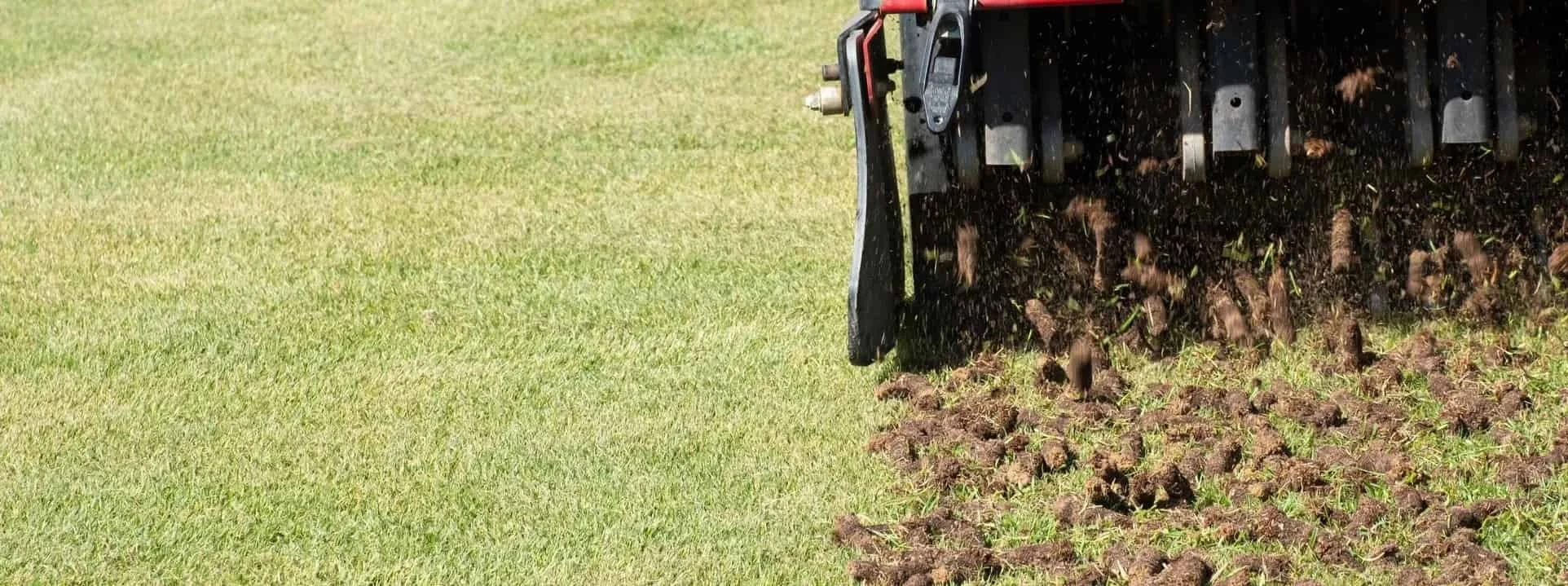
A core aerator pulls out plugs of soil across the lawn, typically every few inches and 2 to 3 inches deep. Those holes do three things: they relieve soil compaction so roots can grow deeper, they reduce the thatch layer that builds up between the turf and the soil surface, and they create direct soil contact for overseeded grass, which dramatically improves germination rates compared to seed scattered on dense existing turf.
The cores pulled from the lawn are left on the surface. They break down in one to two weeks on their own and return organic matter to the turf. Leave them alone - raking them up removes the benefit.
Overseeding immediately after aeration - not weeks later - is what makes the difference. The holes are open and the conditions for germination are right. We schedule both services together so the timing is exact.
What Grass Seed Works in Midlothian
Tall fescue is the right choice for most Midlothian residential lawns. It handles Central Virginia's summer heat and humidity, it establishes well in fall, and it stays competitive in dense suburban turf conditions alongside irrigation. We use quality turf-type tall fescue blends, not pasture mixes - the variety blend matters because it spreads disease risk and produces more consistent turf density across different areas of the same lot.
Seeding rate varies by how thin the existing turf is. Dense areas need less seed to thicken up. Thin or bare zones get heavier application. We calibrate this on-site after assessing the lawn - not a uniform broadcast across the whole property regardless of current condition.
What Determines Aeration and Overseeding Cost in Midlothian?
Pricing for lawn aeration and overseeding in Midlothian, VA depends on:
► Lawn size and total square footage
► Current turf density and how much overseeding material is required
► Whether the property has irrigation that requires working around heads
► Thin or bare zones that need higher seeding rates
► Accessibility and any gated or fenced areas
Midlothian properties range from compact subdivision lots to larger homes in communities like Salisbury. We provide a free estimate after seeing the lawn in person.
Call (804) 514-6701 to schedule - fall slots fill early.
Why Midlothian Homeowners Choose Fiore's for Lawn Aeration
Chris Fiore has been aerating Midlothian residential lawns since 2007. He understands the specific conditions of Chesterfield County suburban properties - how irrigation systems affect compaction rates, how dense subdivision turf responds differently to overseeding than open rural lawns, and how the fall service calendar in this market works.
We schedule fall aeration starting in early September and work through the window systematically. Midlothian homeowners who call in late October asking whether it is still worth seeding are almost always told the window has closed - which is why we communicate the timeline clearly up front and make it easy to get on the schedule before the window gets tight.
Every estimate is free. We assess the lawn, identify the thin zones, and give you straightforward pricing before we start.
Aeration and Overseeding Across Midlothian and Chesterfield County
Fiore's Landscaping handles fall aeration and overseeding for residential properties throughout Midlothian, including communities in Salisbury, Hallsley, Founders Bridge, Watermill, Woolridge, and The Highlands. We also serve homeowners in Powhatan and Goochland. The fall schedule in Midlothian books up faster than most homeowners expect - contact us before September to secure your slot.
Lawn Aeration and Overseeding FAQs - Midlothian, VA
-
Right after aeration, the soil plugs left on the surface do look unusual - small cylinders of soil distributed across the lawn. This is normal and expected. The plugs break down on their own within one to two weeks without any action on your part. After they dissolve, the lawn looks normal again. If your HOA has a particularly active inspection schedule during this window, it is worth knowing the timeline so you can schedule accordingly - plugs are typically gone within 10 to 14 days.
-
It affects the scheduling and the way we work, not whether aeration can be done. Core aeration pulls plugs from the top 2 to 3 inches of soil, which is above buried irrigation lines on properly installed systems. Surface pop-up heads are the main thing to be aware of. We work around any marked heads and avoid aerating directly over them. If you have heads that sit unusually high or any areas where the system was installed shallowly, flag those before the appointment and we will aerate around them.
-
Most Midlothian lawns that look fine in summer show their problems by October or the following spring - thin zones, bare patches near paths or play areas, and turf that thins out faster than expected during stress periods. Compaction builds gradually and is not always visible until the turf stops recovering well. Irrigated lawns in particular tend to hide compaction because irrigation keeps them looking green even when the root system is shallow and restricted. Aeration addresses the underlying condition, not just the surface appearance.
-
The main effect is thicker, denser turf by the following spring. In HOA neighborhoods where lawns are constantly visible to each other, the difference between a lawn that was aerated and overseeded the previous fall and one that wasn't becomes obvious by April or May. Thin bare zones fill in, color is more consistent, and the turf handles mowing and normal use without wearing down in high-traffic areas as quickly. The investment in September pays off in the way the property looks from March onward.
-
September through mid-October is the window for Central Virginia. Early September is the best slot - soil temperatures are still warm, there is time for seed to germinate fully before frost, and the lawn has longer to establish before winter. Mid-October still works but germination slows as nights cool. After mid-October the risk of insufficient establishment before cold weather increases significantly. We book fall aeration from early September and the schedule fills up - call or contact us before September to get on the calendar.
-
Keep the top inch of soil consistently moist until the seed germinates, which means light watering once or twice a day for the first two to three weeks. For Midlothian properties with irrigation systems, many homeowners can adjust their system's run times and frequency to handle this without manual watering. Once new grass reaches 2 inches, back off to deeper, less frequent watering to push roots down. Your existing irrigation schedule is likely not calibrated for seeding - the germination period requires more frequent, lighter applications than the established turf cycle.
-
Thin areas near fences are usually a combination of compaction from foot traffic along the fence line and shade from the fence reducing turf density. Aeration addresses the compaction and overseeding fills the thin spots. If the area gets less than 4 hours of direct sun, standard tall fescue will still work but may stay thinner than the rest of the lawn - fescue tolerates partial shade but does not thrive in deep shade. We assess shade conditions during the estimate and let you know what to expect from seeding in those zones.
-
For most Midlothian properties, yes. Chesterfield County soils compact relatively easily under regular suburban use and mowing, and irrigated lawns compact faster than dryland properties because the soil stays consistently moist. One aeration per year is what it takes to keep ahead of the compaction cycle. Properties with lighter foot traffic or larger lot sizes with less intense use can sometimes go every other year, but the standard recommendation for typical Midlothian subdivision properties is annual fall aeration.