
Weekly vs Biweekly Lawn Mowing in Central Virginia
In Central Virginia, weekly lawn mowing usually gives cleaner, more consistent results than biweekly mowing during active growth. For many homes in Powhatan, Midlothian, and Goochland, waiting too long between cuts leads to overgrowth, rougher curb appeal, and a yard that feels harder to keep under control. Deciding on the right lawn mowing service frequency isn't just about how often the mower shows up, it’s about maintaining the health and appearance of your property throughout the unpredictable Virginia growing season.
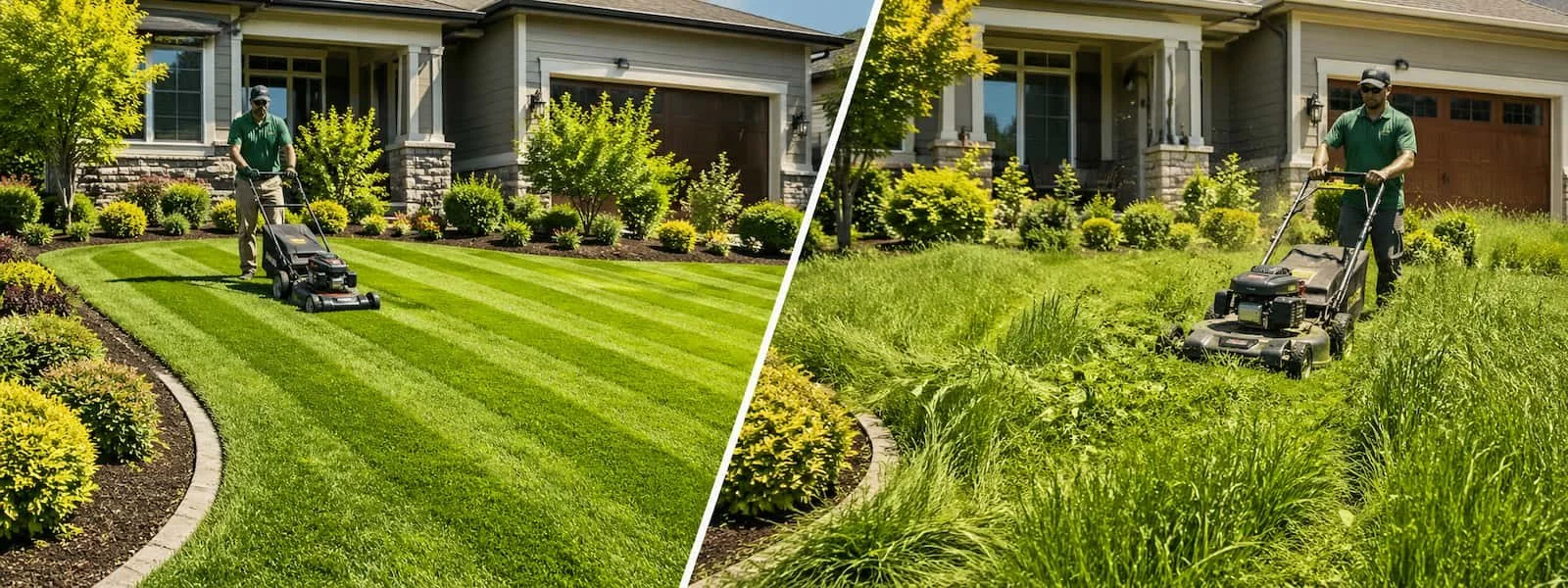
Weekly or Biweekly?
When asking "is weekly or biweekly lawn mowing better," the answer depends largely on your expectations for curb appeal and the specific type of grass you have. For the vast majority of residential properties in our area, weekly mowing service is the superior choice.
A weekly schedule ensures that the mower is only removing the top third of the grass blade. This "one-third rule" is the gold standard for a healthy lawn. When you stretch the mowing schedule to every two weeks, the grass often grows too tall. Cutting off more than half the blade at once can stress the turf, leading to a yellowed appearance and a thinner lawn over time. If you want a yard that looks manicured and uniform, weekly is the way to go. Biweekly mowing is typically reserved for low-maintenance areas, periods of extreme drought, or late in the fall when growth has significantly slowed.
How Grass Growth Changes the Best Mowing Schedule
The "best" frequency isn't a static number; it fluctuates with the weather. In Central Virginia, we experience heavy rain in the spring and early summer, which causes grass to shoot up rapidly. During these peak weeks, even a weekly lawn care routine can sometimes feel like it's barely keeping up.
If you are on a biweekly schedule during a rainy May in Midlothian, your grass might reach six or seven inches before the next service. Attempting to cut that back down to a standard three or four inches results in heavy "clumping, "those unsightly piles of dead grass left sitting on top of your lawn. These clumps don't just look bad; they can actually smother the living grass underneath. By sticking to a consistent weekly frequency, you avoid the "jungle effect" and keep the growth manageable.
What Weekly Service Prevents That Biweekly Often Does Not
Choosing weekly vs biweekly lawn mowing comes down to preventing the common headaches that occur when a yard is left too long.
Clumping and Debris: As mentioned, tall grass produces more clippings. A weekly cut allows the clippings to be fine enough to filter down into the soil as natural fertilizer. A biweekly cut often leaves behind thick rows of hay that require extra raking or blowing.
Weed Seed Distribution: Many common Virginia weeds, like dandelions and crabgrass, can go from a sprout to a seed head in less than two weeks. Weekly mowing chops these heads off before they can drop seeds, helping naturally suppress weed populations without extra chemicals.
Pest Habitat: Tall, thick grass is a haven for ticks, fleas, and mosquitoes. Keeping the lawn at a consistent, shorter height through weekly service makes your yard less inviting for pests and safer for pets and children.
Uneven Growth: Not all patches of your yard grow at the same rate. A biweekly schedule often results in a "shaggy" look where some areas are significantly taller than others, destroying the clean lines of your landscape.
Not sure if your yard needs weekly or biweekly service? Ask for a schedule recommendation based on your property and season.
How Yard Size, Shade, and Growth Rate Affect the Right Plan

While weekly service is the standard recommendation, every property in Powhatan, Midlothian, and Goochland is unique. Several factors might influence your specific lawn mowing frequency:
Shade vs. Sun: Lawns with heavy tree cover in neighborhoods like Woodlake or Founders Bridge often grow slower than wide-open, sunny lots. In deep shade, the grass may not reach a height that justifies a weekly cut every single time.
Irrigation: If you have an in-ground sprinkler system, your grass is going to grow consistently regardless of the heat. For irrigated lawns, weekly mowing is almost mandatory to prevent the grass from becoming unmanageable.
Fertilization Programs: A well-fed lawn grows faster. If you invest in a high-quality fertilization plan, you will likely need a weekly mowing schedule to keep up with the vigorous growth that those nutrients provide.
Property Use: If your backyard is the neighborhood hub for cornhole, soccer, or dogs running, a weekly cut keeps the "carpet" short and resilient. If the property is a vacant lot or a back-acreage area that no one sees, biweekly might suffice.
What Homeowners in Powhatan, Midlothian, and Goochland Usually Choose
In our local service areas, we see a clear trend. Most homeowners who take pride in their property’s curb appeal opt for Powhatan lawn mowing on a weekly basis from April through October.
In Midlothian lawn mowing circles, where HOAs often have strict standards regarding lawn height and neatness, biweekly mowing can actually lead to compliance letters. The "scraggly" look that happens around day 10 or 11 of a biweekly cycle stands out negatively against neighbors who are on a weekly program.
Conversely, in more rural parts of Goochland lawn mowing, some residents choose to alternate. They might stick to a weekly schedule during the lush spring months and move to a biweekly schedule during the "summer dormancy" of July and August when the heat slows down the growth of cool-season grasses like Fescue.
Regardless of the frequency, the goal is always the same: a clean, professional finish that makes the home look well-cared for. Once the mowing season winds down, many of these same homeowners transition their focus to leaf removal to ensure their turf stays healthy through the winter.
If you want a yard that stays consistently clean, request a mowing plan from Fiore’s Landscaping. We can help you determine the ideal frequency to keep your property looking its best all year long.
Frequently Asked Questions
-
Yes, for most residential lawns. Weekly mowing promotes a thicker, healthier turf and provides a much cleaner aesthetic. It prevents clumping and ensures you never remove too much of the grass blade at once.
-
Biweekly mowing can work during the hottest parts of the summer (July/August) if the grass has gone dormant due to heat and lack of rain. It is also common in late autumn before the final "winterizer" mow.
-
Waiting too long forces the mower to cut through thick, tall stalks. This can dull mower blades, leave behind "hay" clumps that rot on the lawn, and stress the grass, making it more susceptible to disease and brown spots.
-
Weekly mowing provides the most consistent curb appeal. A weekly schedule ensures those crisp, clean lines stay visible, whereas a biweekly schedule often looks "overdue" for a cut for several days before the mower actually arrives.
